Vanda Green Condo Investment Thoughts: New Property in Bukit Timah
I have a soft spot for Bukit Timah. Not because it is trendy, but because it tends to stay practical. When you look for a condominium with staying power, you end up caring about the boring stuff: access, daily convenience, traffic patterns at peak hours, and whether the unit layout still makes sense after a few years of changing tenants.
That is why I keep coming back to new releases in the area, especially when they sit near established roads and facilities. One of the names that has been drawing real attention lately is Vanda Green, and if you are considering a Vanda Green condo or simply tracking a Vanda Green new condo for potential investment, I think it helps to look beyond the brochure photos and walk through the usual decision points in a grounded way.
This is not a “buy because it’s new” story. It is a “how to think like an owner, not a gambler” story, using Dunearn Road condo context and the realities of district 11 condo demand.
Bukit Timah, but make it usable
People say Bukit Timah is desirable, and yes, demand is there. But the real question for a buyer is: desirable for whom, and how consistently?
When a development is in a good pocket, the demand usually comes from a mix of owner-occupiers and renters who want a stable lifestyle. In Bukit Timah, that mix often includes professionals who value schooling and convenience, plus families who prefer settled neighbourhoods over constant construction noise. The key is that your unit still needs to work for these groups, not just look good during a showroom viewing.
A new launch condo can be a strong choice when it offers something buyers recognize immediately. That could be a functional layout, a sensible unit mix, reasonable maintenance considerations, or simply a layout that doesn’t feel “temporary” once you move in. It can also mean better amenities and common spaces, depending on the project design.
With Vanda Green new condo specifically, the appeal is partly about timing and partly about what a buyer expects from a fresh condominium product in the area. A condo that feels modern, has efficient facilities, and is planned to look good for years has a better chance of holding its appeal when the excitement of the launch phase cools down.
The “new condo” advantage, and the trade-offs
There is a lot of marketing energy around a new property or new launch condo. I won’t pretend the hype is useless, but I do treat it like a starting point, not the end of the research.
From an investment standpoint, a condominium that is still in its early life cycle often has some advantages:
- New facilities are generally more attractive to tenants who care about usable amenities, not just location.
- It may be easier to attract owner-occupiers who want to avoid immediate renovation costs.
- Fresher developments can command better first impressions during viewings.
But there are trade-offs that are just as real.
If you are buying something that is still under development, you are dealing with time. Waiting is not free. You are tying up capital while the property is being built. Meanwhile, rental demand and price levels in the market can shift. Even if the area remains solid, the timing matters.
Then there is also the matter of unit selection. Two units in the same project can behave very differently in the market depending on stack, orientation, and what faces your living space. I have seen buyers regret buying a unit that looked “fine” in the show flat, only to realize later that the real-world view and privacy were not what they imagined.
That is why I personally treat the view showflat experience as necessary but not sufficient. It should help you confirm finishes and layout flow, but you still need to stress test your decision using details you can verify.
“District 11 condo” demand tends to be steady, but not uniform
If you are thinking about district 11 condo positioning, you are usually betting on the stability of end-user demand. That is often supported by the area’s reputation for education options and lifestyle convenience. But “steady” does not mean “same for everything.”
Different buyers and renters gravitate toward different unit profiles. For example, a one-bedroom layout can do very well for certain tenant types, but it may not be the sweet spot for others. Larger layouts can appeal to families, but they can also face higher scrutiny on cost and livability.
I have found that the best-performing investments often have clarity in target demand. A unit that is easy to explain to a renter or buyer tends to hold attention longer. Units that are “quirky” or hard to market usually force you into longer holding periods, which is costly in opportunity terms.
So when you consider Vanda Green condo prospects, I would encourage you to map the likely buyer or tenant, then evaluate whether the unit makes sense for that person on an ordinary day. How does the kitchen function? Is the living area practical? How does the balcony or window orientation affect natural light and the feeling of space?
It sounds simple, but it is exactly where money is won or lost.
What I’d verify during a show flat visit
If you are going for a view showflat, I would not rush. When I view new projects, I focus on “repeatable judgment,” meaning I look for things I can assess quickly and consistently across different stacks.
Here are the areas I would personally insist on checking, even if the salesperson gives a smooth explanation.
First, confirm whether the layout supports real furniture movement. Show flats can look spacious because they have curated lighting and ideal staging, but the floor plan still matters. Stand where you would place a dining table. Walk the path from the entrance to the living room, then imagine the flow when you carry groceries.
Second, look at how the unit feels at the window edge. Ask questions about view direction, privacy, and whether there is a clear line of sight to other blocks. The “feel” of the view is often more important to tenants and owner-occupiers than people expect. A unit can be beautifully finished, yet if it feels boxed in, it becomes harder to lease and easier to dislike.
Third, take note of how sound might carry. You are in a condominium, not a landed home. Walls and shared spaces will matter, especially for units that face certain areas. I always try to stand near bedrooms and bathrooms during the viewing, then mentally simulate daily noise sources: doors, footsteps, plumbing, and occasional household appliances.
Fourth, check the details that affect long-term satisfaction. This includes storage space, how doors open, and whether the bathroom setup feels practical for everyday use. These are not glamorous factors, but they show up in tenant retention.
If you are open to it, consider trying a unit that is not the absolute most “premium” stack, then compare. Sometimes the less flashy stack is the one that ends up being easier to live with and easier to rent.
The investment lens: what you are really buying
When someone tells me, “I’m considering a new condo in Bukit Timah,” I usually ask a more pointed question: are you buying for lifestyle first, or rental yield first?
The answer changes what you should prioritize.
If you are lifestyle first, you can tolerate a slightly lower rental profile as long as the home works for you and you enjoy it enough to hold longer. In Bukit Timah, holding power can matter more than chasing yield alone. People pay for the ability to live well.
If you are yield first, then you have to think like a renter. Renter demand usually cares about usability, proximity, and ease of daily life. It also cares about the unit’s “explainability.” A unit that is easy to market tends to lease faster.
For example, a well-planned two-bedroom might attract families who want space, but only if the bedrooms feel properly separated and the living area is not awkward. A one-bedroom might appeal to couples or individuals, but only if it does not feel cramped once you add basic furniture.
With Vanda Green new condo and any new property under consideration, you also want to avoid being too anchored on the show flat impression. Sometimes a layout with a dramatic feature sells the unit, but the market later prefers straightforward practicality. I have seen this play out repeatedly, across multiple projects and market cycles.
A practical way to think about your stack and unit mix
Stack choice is where real-world outcomes diverge. Two units with the same floor area can perform differently because of orientation, privacy, and natural light.
I have also learned to treat the balcony or window view as part of the product, not an afterthought. Tenants and homeowners often describe the daily experience in terms like “bright” or “quiet,” and those are usually tied to direction and building spacing.

So, how do you make the decision without guessing?
You can request details, ask for stack guidance, and compare how different units would feel in daylight. If the developer shares information about typical views, distance to the nearest blocks, or layout orientation, take it seriously and verify it against what you see.
This is also where the keyword Dunearn Road condo positioning can matter, because access and surrounding built form affect traffic flow and the everyday experience around the development. Even if you are new condo near Sixth Avenue MRT not directly facing a main road, the neighborhood’s movement patterns influence how noisy or calm your unit feels.
Financing and timing: the part people underplay
A condominium investment is rarely just about the purchase. It is about cash flow, timeline, and your ability to handle holding.
If you are buying during a launch or pre-completion phase, ensure you can handle a period where the unit is not yet yielding the way you expected. Some buyers rent out earlier, others prefer to wait. Either approach affects your costs.
If you are unsure, I suggest stress-testing your plan. Assume a longer-than-expected completion timeline. Assume rental take-up is slower than the optimistic scenario. This is not fear-mongering, it is planning.
Also think about resale dynamics. A new condo might be attractive during the initial years, but resale depends on how the market values “fresh stock” later. In Bukit Timah, buyers typically consider location, then building condition, then unit livability. The more you select a unit that is easy to live with, the better your chances in both rental and resale.
What to ask before you commit (a short list)
If you plan to book appointment for a view showflat, bring curiosity, not just enthusiasm. Here is the compact checklist I use, because it keeps me from being swept up in the polished presentation:
- Which stacks are the most desirable for view and privacy, and why
- Expected unit configuration details that affect layout practicality (storage, bedroom separation, bathroom usability)
- Clarifications on estimated completion timeline and handover process
- Any realistic notes on noise or daily ambience from nearby roads and common areas
- A clear breakdown of costs you will carry while waiting and after handover
You do not need to ask every single question word-for-word, but these topics protect you from common regrets.
Vanda Green condo: how I’d evaluate it without getting carried away
Let me talk more directly about the project, without pretending I can see more than what you can check on the ground. For a Vanda Green investment consideration, the core question is not whether it is a “new condo in Bukit Timah,” because that is only the headline. The question is whether it fits into the type of demand that stays active in that micro-market.
In Bukit Timah, demand tends to revolve around livability and ease. When I evaluate a Vanda Green condo, I would pay attention to:
- whether the unit mix matches likely renters or owner-occupiers
- whether the layout is intuitive, especially for the living and sleeping areas
- whether the finishes and common amenities feel durable and maintainable
- whether the project’s location and connectivity are genuinely convenient on a normal weekday, not only on a calm Sunday morning
A show flat can help confirm finishes and the sense of space. But for investment thinking, you want to leave the viewing with specific answers that affect how the unit will compete in the rental market later.
For instance, does the unit feel like it will remain attractive with minimal renovation in five years? Tenants do not love dated looks, but they also do not want the hassle of move-in repairs. Owner-occupiers want to feel that the unit will stay relevant.
New projects often win on freshness, but they can lose if design choices feel trendy rather than timeless. That is why I focus on layout fundamentals and material durability.
The rental reality: what tends to lease faster
If you are investing, you want your unit to lease, and then you want it to stay occupied. Fast leasing matters, but repeatable leasing matters more.
In my experience, units that lease well tend to have a combination of practical layout and a “story” that renters can understand quickly. They can describe it in one sentence. The kitchen is usable. The living space fits normal furniture. The bedrooms are comfortable. The unit feels bright.
If your unit requires a lot of explanation, you may find demand slower. This can happen when a layout has odd proportions, too much wasted corridor space, or storage that is more symbolic than functional.
So for Vanda Green new condo specifically, I would watch for those layout signals during the viewing. Do the rooms feel proportionate? Can you imagine placing a bed and wardrobe without making the room feel like a hallway? Are the bathrooms convenient in daily routines?
These are not style questions. They are functional ones, and functional units tend to attract better long-term tenancy.
Resale thinking: where value usually shows up
Even if you rent out, resale remains part of your risk. You cannot treat resale as a future problem you can ignore today, because buyers at resale time are rarely impressed by a unit that is unpleasant to live in.
In resale scenarios, buyers often focus on:
- location and surrounding convenience
- building condition and maintenance standards
- unit livability
- whether the unit has a layout that still makes sense compared to newer competition
A new property can still have strong resale if it holds up well against the next wave of launches. The best hedge you can create is selecting a unit that is not overly dependent on a “newness premium.” In other words, a unit should remain enjoyable even when the market is no longer excited by the launch.
That is also why I like prioritizing timeless layout features over flashy finishes.
How close is “close enough” to your everyday needs?
Sometimes the biggest mistake buyers make is assuming distance is the same as convenience.
Two units can be “near” the same amenities, but if the route is stressful during peak hours, tenants and buyers will feel it. That shows up as preference, and preference translates to leasing and pricing.
So when you consider a new condo in Bukit Timah like Vanda Green, think about your daily commute habits if you are renting out to a profile similar to yourself. If your target tenant takes public transport, check walking and transfer experiences. If they drive, check whether traffic patterns are likely to affect daily routines.
I am not asking you to do traffic engineering. I am asking you to be honest about how the area feels at different times. A neighborhood can be great on paper, yet exhausting on a weekday morning.
What I would do next if I were in your shoes
If you are genuinely interested in Vanda Green condo and want to decide responsibly, I would treat your next steps as a research mission, not a sales conversion.
First, confirm your budget and your comfort with the holding period. New launches can be excellent, but they still require patience and cash planning.
Second, visit the view showflat with a plan to compare at least one alternative stack or unit option, if available. The difference between stacks can be meaningful, and you only learn it by seeing it with your own eyes.
Third, talk to someone who will be transparent about the unit’s pros and cons, not only the marketing highlights. You are looking for guidance that helps you make a decision, not guidance that pushes you to sign quickly.
And if the team offers a straightforward way to book appointment, use that to keep the process organized. A good appointment is when you can ask questions without feeling rushed, and when you can take notes and compare your thoughts afterward.
Here’s a simple way to keep it grounded after your visit: write down three things you liked immediately, and three things that made you pause. If the positives strongly outweigh the doubts, you are likely looking at a unit worth further consideration. If not, you may have discovered a mismatch early, which is a win.
Final thoughts on Vanda Green and a Bukit Timah mindset
I will say this plainly. I like investments where the unit is easy to live in and easy to rent. I also like investments where the area’s demand isn’t dependent on a one-off trend.
Bukit Timah tends to reward that mindset. It is a place where buyers care about stability, daily convenience, and practical livability. That is why a Vanda Green new condo can make sense for someone who wants a fresh product, a well-positioned address, and a layout that can hold its appeal beyond the first year.
If you are considering Vanda Green condo, focus on the details that affect everyday life, the stack choice that shapes view and privacy, and the time plan that keeps your finances calm. Done right, a district 11 condo purchase is less about chasing excitement and more about building something you can stand behind.
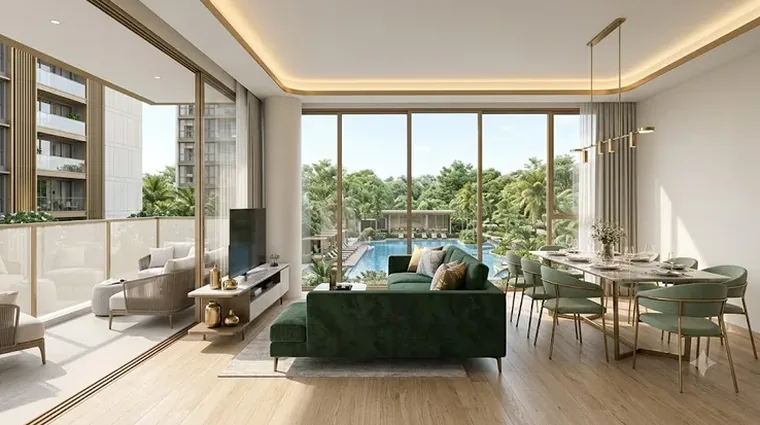
If you want to take action, the most practical next step is to book appointment for a proper show flat session and ask the questions that protect your future self. That is how you turn curiosity into a decision you feel confident about.