Dorset Gardens New Launch Watch: What “Attractive City-Fringe” Means
If you have been tracking District 8 launches, the phrase “attractive city-fringe” probably sounds familiar. It is also a phrase that marketing teams love because it is broad enough to cover a lot of outcomes. The hard part for buyers is translating that phrase into something you can actually feel on a weekday, a weekend, and during the three or four years after TOP.
With Dorset Gardens, the “city-fringe” framing is not random fluff. Based on what has been publicly disclosed about the project, the Dorset Road site sits in District 8, in Singapore’s city fringe area near Farrer Park MRT, and is positioned close to well known schools such as St. Joseph’s Institution. That combination matters because it shapes daily convenience, long term tenant appeal, and the type of buyers the development will likely attract when it launches.
This is a new launch watch piece, so I will keep expectations grounded. There are still gaps around brochure specifics, showflat details, and confirmed launch pricing that you should not treat as settled until you see the official materials. What you can do now is understand the project fundamentals, then decide how to evaluate it properly when the Dorset Gardens brochure and Dorset Gardens pricing are released, or when you book a Dorset Gardens book appointment to view the showflat.
The “city-fringe” advantage is about friction, not prestige
City fringe is often misunderstood as “almost central, but not quite.” That is too vague. What it really means, in buyer terms, is friction levels. How many “small inconveniences” do you tolerate each day because you live slightly away from the most convenient pocket?
For Dorset Gardens, the disclosed location is described as near Farrer Park MRT, and near established schools like St. Joseph’s Institution. Those two anchors are practical. MRT proximity affects commute patterns, where you spend time and how you plan. Schools affect family demand and, later, the pool of buyers who find the unit layout and environment intuitive.
I have seen buyers dismiss city-fringe projects because they are chasing a specific prestige benchmark. But most daily life is not a photo. It is walking, waiting, transferring, dropping off, and finding groceries without committing to a longer outing than you intended. City fringe can deliver enough of the “close to things” benefit without requiring you to pay for the most expensive address premium.
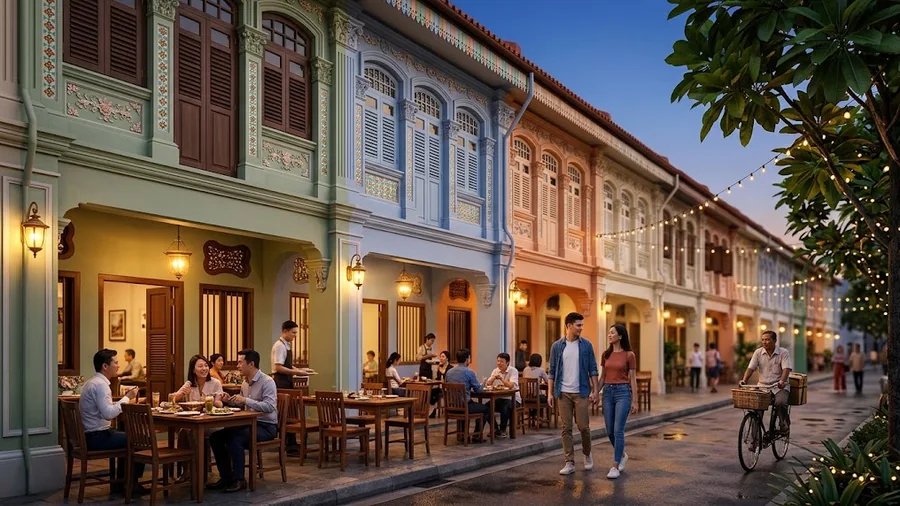
That said, “attractive” does not mean “automatic value.” The location has to pair with a credible product plan, and that is where Dorset Gardens becomes more than a headline phrase.
What Dorset Gardens is planned to be (and why that matters)
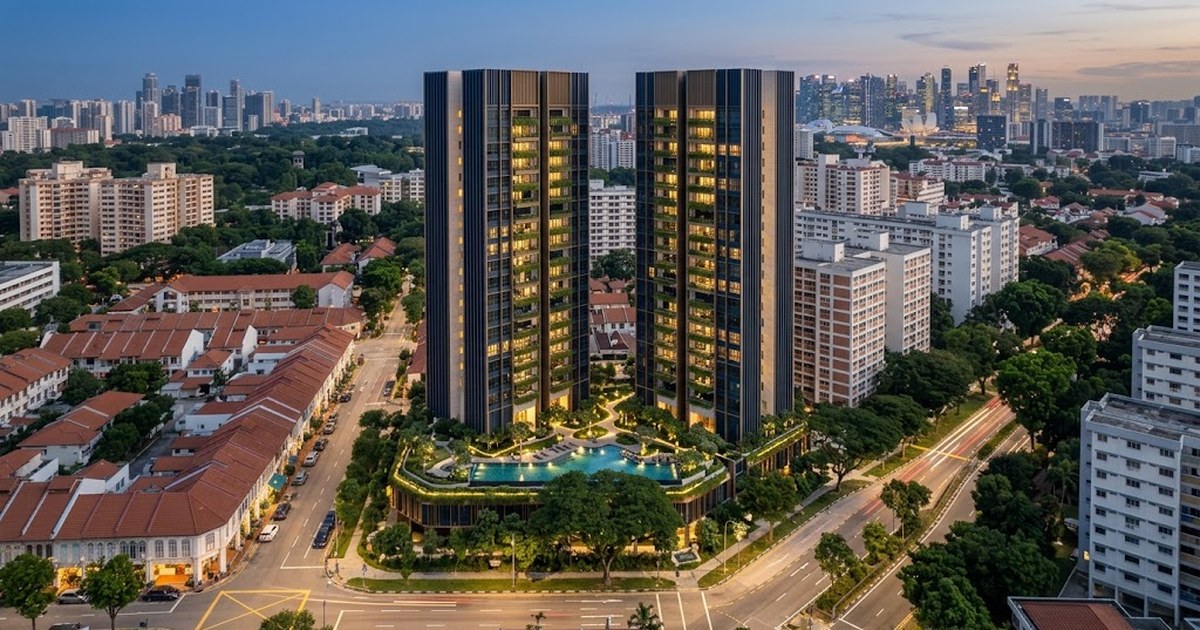
From the project disclosures tied to the Dorset Road land acquisition and UOL’s development planning, Dorset Gardens is slated as a private condominium with two residential towers. The disclosed plan is about 428 units across two 28-storey towers, on a 10,399 sq m leasehold site.
Those details are not just numbers. They tell you how the development will likely feel.
A two tower layout, at this unit scale, usually creates a rhythm where shared facilities are centralized, circulation patterns are predictable, and you are not “lost” in an ultra low density estate. For buyers, that tends to influence resale and rental dynamics. When there is a clear buyer pool and a familiar living scale, units are easier to position in the market later.
And because the site is leasehold, you should be thinking in ranges and timelines, not in day one assumptions. Leasehold projects can be very workable and still perform well for the right buyer, but the purchase decision should be consistent with your holding period and your tolerance for how lease tenure might affect financing perception and future pricing negotiations.
The developer team angle: signals that go beyond the brochure
A good new launch watch is not just about what the brochure promises. It is about whether the project is backed by a team that has the operational discipline to deliver.
Dorset Gardens has been linked to a consortium led by UOL, with SingLand and Kheng Leong participating. UOL’s materials identify the development structure as an 80:20 joint venture between UOL and Kheng Leong, with SingLand part of the development structure.
What should you do with that information as a buyer?
First, it reduces the risk that the project is merely a land banking exercise. When a major operator is at the helm, you tend to see more disciplined pipeline management and clearer planning horizons. Second, consortium structures often reflect how capital, delivery accountability, and development expertise are distributed. You still need to check Dorset Gardens Singapore the terms that matter to buyers, such as the sales program and timeline, but the presence of established developers is generally a positive baseline.
UOL’s disclosures also indicate that the Dorset Road site was acquired in January 2026, and UOL’s effective interest in the site is 70%. That matters because it helps explain how a target launch timing might be formed and how quickly the sales build-up can reasonably happen.
Timing matters: watch for the 1H2027 launch window
If you are planning your household move, timing is not a “nice to have.” It is the difference between signing now with certainty and signing now with guesswork.
For Dorset Gardens, the publicly disclosed target is a launch in 1H2027. That means you can expect marketing momentum to build closer to that window, and you should be prepared for the Dorset Gardens brochure, showflat schedules, and Dorset Gardens pricing to appear nearer to launch rather than earlier.
In practical terms, the right way to approach a timing gated launch watch is to do two things in parallel:
- Start gathering your evaluation criteria now, so you know what you are looking for when the official brochure is released.
- Avoid making financial commitments based on rumors or unconfirmed marketing numbers. If a selling point is truly strong, it will survive the scrutiny when the numbers arrive.
You can also use the launch window to coordinate your own timeline. If you have an existing home, renovations, or school transition plans, aligning the move with a 1H2027 target can spare you from the stress of mid-term interim rental decisions.
Why “near Farrer Park MRT” is more than a map pin
When a developer says “near Farrer Park MRT,” it is tempting to think the selling point is just distance. In reality, what matters is how the commute pattern changes your routine.
For many buyers, the MRT location will change the way they shop and how they schedule social plans. When you are close to a rail node, weekday errands can shift from “planned trips” to “quick errands,” and that difference compounds over time.
Also, MRT proximity can shape the type of tenant or buyer demand you attract. City-fringe districts often have a mix of working professionals and families who want access to the city but prefer calmer surroundings than the very core. That demographic fit can be a meaningful support for rental liquidity.
One more practical note: “near” can be interpreted differently depending on whether you walk, take feeder bus, or use short rides to connect. That is why the phrase is not enough. When the Dorset Gardens view showflat and viewing sessions open, I would recommend you also walk the area yourself, even if only for a morning period, to experience how the walk to the station feels in real conditions.
Schools nearby can be a lasting driver, not just a selling point
The project disclosures mention schools such as St. Joseph’s Institution. Nearby schools can support a stable demand profile because education choices are often long horizon decisions for families.
What I have found is that buyers who are genuinely planning to hold for several years tend to value “daily life compatibility.” If schools, parks, and key conveniences are in a predictable radius, it reduces the probability of forced relocations due to school logistics.
This is especially relevant for condo buyers because many will eventually upgrade or refinance based on family needs. School adjacency does not guarantee performance, but it does influence how intuitive the area feels to families, and that can affect both resale interest and rental tenant fit.
The trade-off: city-fringe can mean more change, and that affects risk
City fringe is dynamic. It is not static like a deeply entrenched prime enclave. Development in the wider area can bring improvement, but it can also bring temporary disruptions, changing traffic patterns, and shifting perceptions of the neighborhood.
So when someone tells you “attractive city-fringe,” ask yourself what kind of change you are comfortable with.
For buyers, the edge case to watch is this: if you buy for convenience but the convenience corridor changes in a way you do not like, the “feel” of the address can shift faster than you planned for. That is why your due diligence should include not just the project plan, but also how you personally experience the neighborhood now, and what you believe will still be true after the project completes.
Since the confirmed marketing details like the Dorset Gardens brochure contents, the specific amenity package, and finalized pricing are not confirmed in the material I reviewed, you should keep your focus on what is disclosed and what is verifiable, then verify the rest when official information is released.
What to look for in the Dorset Gardens brochure and showflat
When the Dorset Gardens brochure becomes available and when you can book a Dorset Gardens book appointment to view the showflat, treat it like an evidence check rather than a sales event.
At this stage, I would not rely on any unofficial figures about Dorset Gardens pricing. Instead, use your visit to confirm:
- Whether the two-tower layout creates the kind of privacy and daylight experience you expect.
- Whether unit mix supports your preferred balance of livability and resale appeal.
- Whether the shared facilities match the scale implied by about 428 units.
- Whether the corridor and common area designs align with your daily movement patterns.
You can also use the showflat visit to test your own “micro preferences.” For example, I once worked with a buyer who had liked the location but realized, after viewing the showflat, that the living room orientation would make afternoon glare a problem. The unit still made sense on paper. It just did not fit their daily rhythm.
That is the real value of a Dorset Gardens view showflat, even before pricing becomes your main focus.
A short checklist before you commit (use it at the brochure desk)
You will make better decisions if you show up with questions that map directly to your future regret areas. Here is a focused checklist you can use when you attend a Dorset Gardens book appointment or when you review the official brochure.
- Confirm the unit mix and exact floorplate details, not just the overall unit count of about 428.
- Verify the leasehold tenure details and how it is stated in the sales materials.
- Ask how the two 28-storey towers are positioned relative to light, privacy, and surrounding sight lines.
- Request the confirmed parking and access arrangements as described in the official package.
- Clarify the launch timeline plan against the target 1H2027, including key milestones provided to buyers.
Keep your questions practical. Sales presentations can be persuasive, but your goal is to reduce uncertainty, especially on anything that affects future resale or your daily comfort.
Dorset Gardens pricing: why you should wait for confirmed numbers, then benchmark carefully
It is completely normal to want Dorset Gardens pricing early. The problem is that pricing conversations can drift into speculation when buyers are eager. A launch in 1H2027 gives you time, but it also means your best pricing intelligence will likely arrive with official marketing.
When confirmed Dorset Gardens pricing is released, benchmark it in a way that matches your real constraints:
If you are buying for your own stay, you should evaluate the price relative to the unit layout quality, the livability considerations you test in the showflat, and the commute convenience from your usual routes.
If you are buying with rental in mind, you should consider whether the nearby schools and MRT proximity support the tenant profile you expect. Rental demand can be a strong stabilizer for city-fringe addresses, but only if the unit design is actually attractive for that tenant profile.
And if you are buying for resale, you should look at how easy it will be to explain the purchase story later. “Near Farrer Park MRT” and “near established schools” are clearer selling points than vague promises, and that clarity often helps during future listing negotiations.
The developer story meets the buyer story
A project can be well planned, and still be the wrong purchase for you. Dorset Gardens has enough disclosed fundamentals to justify a serious watch: two 28-storey towers, about 428 units, a 10,399 sq m leasehold site, near Farrer Park MRT, and proximity to schools such as St. Joseph’s Institution.
Now connect that to the kind of buyer who will likely love it.
The strongest fit is usually someone who values access without wanting to pay for the most expensive core locations, someone who wants the convenience of being close to a rail node, and someone who benefits from the nearby education ecosystem. If that is you, the project’s city-fringe framing is not just a tagline, it is a lived reality.
If you are the type of buyer who insists on the most premium address in the strict sense, you might feel the difference in how the neighborhood feels or how future buyer narratives will be shaped. In that case, you can still make money, but your risk management needs to be tighter.
What “attractive city-fringe” should feel like in your day
When you are deciding whether to pursue Dorset Gardens, try to translate the phrase into a checklist of your lived experience.
Does getting to work feel easier than your current routine? Do errands feel less time consuming? If you have kids, does the school proximity reduce stress during peak periods? Do you enjoy the neighborhood’s pace, or do you feel you are settling?
These are the questions a brochure cannot answer. They come from walking the route to Farrer Park MRT, observing how busy the area feels at different times, and then using the showflat to confirm the unit experience.
That is how “attractive city-fringe” becomes real, not marketing language.
Where this leaves your decision right now
URA - Release of 2nd Quarter 2026 real estate statisticsAt the moment, you are in a smart window for preparation, not impulse. Dorset Gardens is targeting a launch in 1H2027, and the core disclosed project facts are clear enough to plan around. The missing pieces are exactly what buyers usually need before committing: confirmed brochure details, the exact amenity specifications as presented in marketing, Dorset Gardens view showflat arrangements, and the finalized Dorset Gardens pricing.
So the persuasive move is simple: build your criteria now, then verify the final materials when they arrive.
If you want a grounded path, track the public updates, then when the Dorset Gardens brochure and sales package are released, evaluate the unit specifics and the leasehold terms carefully, test the design in the showflat, and benchmark pricing with a view to your own holding period, not someone else’s timeline.
City-fringe can be a very strong place to buy. Dorset Gardens looks positioned for that kind of buyer, especially given the near Farrer Park MRT reference and the nearby schools mentioned in the project disclosures. The rest comes down to how the final brochure, showflat experience, and confirmed Dorset Gardens pricing match what you need from your next home.